
Yes, Mushroom Bay is an easy, sheltered spot for shore snorkeling that suits most visitors, including first-timers and kids. Pick your entry point away from the boat channel, go later in the morning once the day-trippers clear out, and you’ll get calm water and decent visibility over a genuine coral garden without needing a guide.
TL;DR:
- Snorkeling from the west end of Mushroom Bay offers the calmest water and best family-friendly conditions, especially after morning boat traffic clears.
- Visiting during the dry season from April to October provides the clearest water and optimal visibility over healthy reef patches offshore.
- Mid-morning to mid-afternoon is the ideal time for calmer water and fewer crowds, with conditions shifting quickly due to boat traffic and weather changes.
- Reef-safe sunscreen, properly fitted gear, and staying out of boat mooring lanes are essential for safety and reef conservation during your snorkel.
- Guided trips can enhance safety and reef access by providing personalized gear fitting, guiding you to healthier reefs, and navigating crowded or tricky conditions.
Table of Contents
- Best Spots for Mushroom Bay Snorkeling
- When to Go: Timing and Water Conditions
- What You’ll See Underwater at Mushroom Bay
- Staying Safe: Boats, Currents, and Reef Etiquette
- Gear, Rentals, and When a Guide Is Worth It
- Getting There and What to Bring
- What Actually Makes a Mushroom Bay Snorkel Worth It
- Book a Guided Snorkel Trip With Lembongan Water Sport
- Sources
- FAQ
Best Spots for Mushroom Bay Snorkeling
The bay itself is a curved cove, and where you enter changes everything about your experience. The western end, near the beach clubs, sits farthest from the boat channel and gives you the calmest water to start in. The center of the beach is where most of the mushroom-shaped coral formations sit close to shore, which is also how the bay got its name. The eastern side, closer to the harbor and jetty, looks tempting because the water is glassy, but it’s also where boats idle and maneuver, so it’s the one stretch worth skipping.
Here’s how the entry points break down:
- West end (near the beach clubs): Calmest water, sandy entry, good for first-timers and kids.
- Center of the bay: Closest access to the mushroom coral patches and the highest concentration of reef fish.
- East end (near the harbor/jetty): Avoid for swimming; this is the working boat lane.
- Just offshore, mid-bay: Slightly deeper water with healthier coral cover, better reached by a short pontoon hop than a long shore swim.
If you want to see more than the shallow shore reef, a short boat or pontoon trip is worth the extra step. The coral inside easy swimming distance of the beach has taken some wear from years of foot traffic and anchors, while the patches a few hundred meters out tend to be denser and hold more fish life. It’s not a long ride, usually just five or ten minutes by small boat, but it puts you over reef that hasn’t been touched nearly as much.
When to Go: Timing and Water Conditions
Timing does more for your snorkel than almost anything else you control. Get it right and you’re swimming over clear water with fish everywhere; get it wrong and you’re dodging boat wakes in cloudy water with sand kicked up from fifty other swimmers.
- Go in the dry season if you can. April through October generally brings calmer, clearer water across the island, Mushroom Bay included. The wet season (roughly November through March) can still be fine, but visibility is less predictable.
- Skip the early morning rush. Mornings bring the heaviest wave of day-tripper boats from Bali, and that means more boat traffic, more people in the water, and more stirred-up sediment near the harbor side.
- Aim for late morning through mid-afternoon. Once the first wave of boats has dropped off passengers and moved on, the bay tends to settle down. Mid-afternoon in particular is often the quietest window, with fewer people and calmer water than you’ll find at 9 a.m.
- Check conditions before you wade in. Wind direction, tide, and the day’s boat schedule all shift daily. A quick look at the water from the beach, or a question to whoever’s renting you gear, tells you more than any general rule.
None of this is complicated, but it’s the difference between a snorkel you remember for the fish and one you remember for dodging propellers.
What You’ll See Underwater at Mushroom Bay
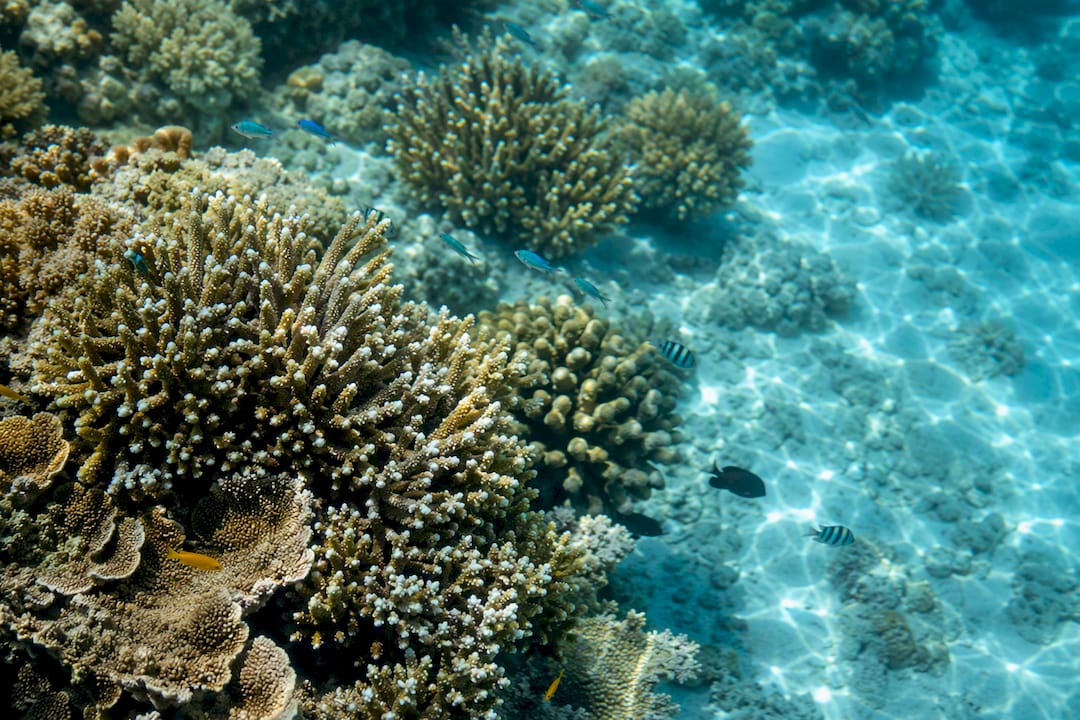
The mushroom-shaped coral heads that give the bay its name sit in shallow water close to shore, and around them you’ll typically spot parrotfish grazing on the reef, clownfish tucked into anemones, and butterflyfish drifting in loose groups. Sea turtles show up here too, though not on every visit. They’re more of a “possible, not guaranteed” sighting.
If you’re patient and look past the obvious fish, the smaller stuff is where Mushroom Bay gets interesting:
- Rocky crevices near the coral heads often hide small crabs, shrimp, and the occasional moray eel tail.
- Seagrass patches at the bay’s edges attract juvenile fish that won’t venture near the open reef yet.
- Sandy channels between coral clusters are where you’re most likely to spot a ray resting on the bottom.
Coral reefs worldwide have lost significant cover over the past several decades, which is part of why local groups now push snorkelers toward reef-safe habits rather than just “look, don’t touch.” Ocean Gardener, a Bali-based conservation group, runs coral restoration work in the region and encourages visitors to choose operators who factor reef health into how they run trips. Wearing mineral-based reef-safe sunscreen and keeping your fins off the coral does more for the bay’s long-term health than most people realize, and it costs you nothing.
Staying Safe: Boats, Currents, and Reef Etiquette
The single biggest risk at Mushroom Bay isn’t marine life. It’s boat traffic. Local operators consistently flag boat wakes and day-tripper congestion as the thing that changes both current and clarity hour to hour, so treat the water like a shared road, not an empty pool.
- Stay out of the mooring lanes. These are usually obvious once you’re in the water. If boats are idling or anchoring nearby, swim the other direction.
- If a boat approaches, surface and wave. Don’t assume the driver sees your snorkel fin above the water. A raised arm gets noticed; a submerged head does not.
- Snorkel with a buddy and a bright marker. A brightly colored rash guard or a small tow float makes you visible from a boat’s distance, which matters more here than at a quiet, boat-free beach.
- Never stand on coral, even to rest. Coral is a living structure, not a rock, and standing on it kills the polyps instantly.
- Don’t feed the fish. It changes their behavior and throws off the reef’s natural feeding patterns.
Pro Tip: If you’re not confident reading currents or boat patterns yet, snorkel closest to the beach clubs rather than the open middle of the bay. It’s the shortest swim back to shore if conditions shift.
If you notice coral damage or debris while you’re out there, most local dive shops and conservation groups welcome reports. It’s a small thing that actually helps.
Gear, Rentals, and When a Guide Is Worth It
A mask that leaks and fins that rub blisters will ruin a good reef faster than bad visibility ever could. Before you get in the water, run through the basics:
- Mask: Press it to your face without the strap and inhale gently through your nose. If it seals and stays put without suction from the strap, it fits.
- Snorkel: A simple dry-top design keeps water out if a small wave washes over you.
- Fins: Open-heel fins with a strap adjust better across different foot sizes than full-foot fins, especially for rental gear that’s been used by dozens of people.
- Flotation: A vest or noodle isn’t just for weak swimmers. It lets you relax and watch the reef instead of treading water the whole time.
Beach-side rental stands cover the basics, but the gear tends to be shared across a lot of visitors, and fit is often hit-or-miss. That’s where a guided trip earns its cost. A guide fits your gear properly before you start, knows which pockets of reef are healthiest that week, and keeps an eye on boat traffic so you’re not the one watching over your shoulder. Lembongan Water Sport builds its snorkeling trips around exactly that kind of personalized guidance, matching gear and pacing to whether you’ve got a nervous first-timer or an experienced swimmer in the group. For families or small groups who’d rather not share a boat with strangers, a private snorkeling trip gives you that same oversight without the crowd.
Getting There and What to Bring
Most visitors reach Mushroom Bay by fast boat from Bali, with the busiest arrivals landing mid to late morning, which is exactly why that window feels crowded in the water. Once you’re on the beach, Nusa Lembongan’s beach clubs at the western end handle gear rental, shade, food, and restrooms, so you don’t need to plan much beyond getting there.
Pack light but pack smart:
- A quick-dry towel
- Reef-safe sunscreen (mineral-based, not chemical)
- A refillable water bottle
- Small cash for rentals or snacks, since not every stand takes cards
What Actually Makes a Mushroom Bay Snorkel Worth It
The visitors who come back talking about turtles and coral gardens aren’t the ones who got lucky. They’re the ones who timed it right. Show up mid-morning after the first boat wave clears, pick the western entry point, and the same bay that felt chaotic at 9 a.m. turns into a calm, clear swim over real reef. That timing detail matters more than any piece of gear you bring.
Local reviews on TripAdvisor echo the same pattern again and again: calm, family-friendly, easy from shore, as long as you’re not fighting the morning crowd. If you’re snorkeling with kids or you’re new to reading currents and boat traffic yourself, a guided trip removes most of the guesswork and usually gets you into better water than you’d find on your own.
— ada
Book a Guided Snorkel Trip With Lembongan Water Sport
If you’d rather skip the guesswork on timing, entry points, and boat traffic, guided snorkeling trips can offer personalized safety guidance suitable for beginners, families, and experienced swimmers alike.
Families get matched gear and a pace that suits nervous swimmers and confident ones in the same group through the family-friendly snorkeling adventures, while groups wanting more space and less crowd can book a private snorkeling trip instead of sharing a boat with strangers. For visitors staying over in Bali, the snorkeling day trip package bundles transport and guided reef time into one booking. Check current snorkeling packages and availability and message the team on WhatsApp to lock in a time slot that avoids the morning boat rush.
Sources
- Mushroom Bay Beach — Visit Bali
- Mushroom Bay Nusa Lembongan: Tips & Things to Do — Bali Touristic
- Mushroom Bay Beach — Expedia
- Mushroom Bay Nusa Lembongan | Calm Turquoise Cove — BaliSakuraba
FAQ
Is Mushroom Bay the best beach for snorkeling in Bali?
Mushroom Bay, technically on Nusa Lembongan rather than mainland Bali, ranks among the best shore-snorkeling spots in the region because of its sheltered, calm water and visible reef close to the beach. It’s especially strong for families and first-timers who want easy access without a boat trip.
Is Mushroom Bay good for beginners and kids?
Yes. The cove’s sheltered layout keeps waves and currents mild compared to open-water sites, and the shallow reef near shore makes it approachable for first-time snorkelers and kids with basic flotation support.
Are there sharks around Nusa Lembongan?
Reef sharks occasionally show up around deeper dive sites near Nusa Lembongan and Nusa Penida, but they’re rarely encountered in the shallow, sheltered water of Mushroom Bay itself. They’re not something shore snorkelers typically need to plan around.
Do I need a guide to snorkel at Mushroom Bay?
You don’t strictly need one for basic shore snorkeling, since the entry points are straightforward and the water is calm. That said, a guided trip through Lembongan Water Sport gets you properly fitted gear, better-informed timing around boat traffic, and access to healthier reef pockets slightly offshore.
What time of day has the clearest water at Mushroom Bay?
Late morning through mid-afternoon typically offers the calmest, clearest conditions, once the first wave of day-tripper boats has come and gone. Early morning tends to be the most crowded and least predictable window.